Manuscript Review and Editing
SCI manuscript review and editing
Clinical researchers ask “What did we find?” SCI reviewers ask “What gives you the right to say that?” We act as the most demanding first reviewer before your manuscript reaches peer review.

Fields we have worked in
- Neurointerventional surgery: clinical studies of device treatment for intracranial aneurysms
- Critical care and respiratory medicine: ARDS prognostic indicators and clinical prediction models (nomograms)
- Case reports: prepared to the CARE guideline
- Developmental and adolescent psychology: sleep and executive function, and a cross-lagged study of problematic social media use

Three common issues that a simple language polishing service does not catch
Across unrelated fields we keep finding the same three structural problems. None is visible at sentence level. Each becomes obvious when the manuscript is read the way a reviewer reads it.
- The conclusion exceeds what the data can carry. A single-centre series recommends a practice threshold, or a cross-sectional study reads as if it established causality. We match each claim to the study design: randomised trials recommend, retrospective cohorts suggest, single-centre case series observe.
- Internal contradictions are left unresolved. A paper advocating a stent-free technique reports rescue stenting in some cases. We integrate the apparent contradiction into the argument as a bounded, deliberate fallback, before a reviewer raises it.
- Statistics are present but not doing their job. Odds ratios appear without 95% confidence intervals, or prognostic claims are made without effect sizes. We tie each result to the clinical claim it supports and flag missing data before submission.
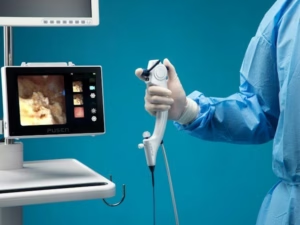
Case: 43 patients, 13 events
A single-centre retrospective study in neurointerventional surgery went from a Chinese first draft to an SCI-ready English submission through several rounds of structural revision.
- Stent counts differed between sections, safety data were reported for one arm only, and a one-sided test was presented as two-sided.
- With 13 outcome events, the multivariable model could not support “our study confirms”. After discussion, the authors reframed it as an exploratory sensitivity analysis.
- The strongest supporting evidence (device shape modification 9.5% vs 31.8%) sat in a supplementary table. Moving it into the Discussion completed the argument.

What we do
- Pre-submission review. Argument and structure, statistical reporting, journal requirements and reporting guidelines (CONSORT, STROBE, PRISMA, CARE, TRIPOD).
- Language editing. Clear, accurate scientific English, edited in tracked changes. A language editing certificate is available on completion.
- Chinese draft to English submission. Translation from a Chinese draft, followed by review and editing.
- Revision after peer review. An initial assessment that rates revision difficulty and sorts each reviewer comment by type and priority; an implementation checklist of analyses and edits; and a point-by-point Response to Reviewers.
- Submission package. Cover letter, title page, supplementary material and the journal’s required checklists.
How it works
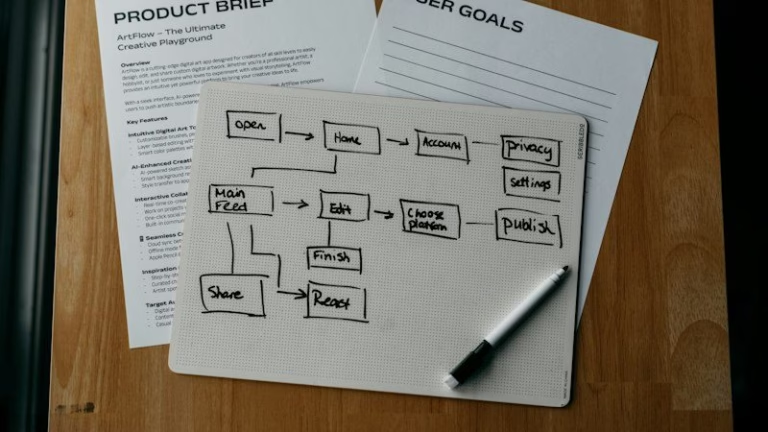
- Send. The manuscript and the target journal, plus reviewer comments for a revision.
- Quote. We assess the scope and propose a fee and delivery date.
- Delivery. The edited manuscript in tracked changes and our review notes, with an editing certificate if needed.
- Revision. When reviewer comments arrive, we can support the revision.

What to send
- The full manuscript (Word)
- The target journal and its author guidelines
- For a revision: the reviewers’ comments
- If the revision needs new analyses: the raw statistical output

Questions
Can you do language editing only?
Yes, priced separately. If we see logic or statistical issues that could affect acceptance, we will still point them out.
Our draft is in Chinese. Can you help?
Yes. We translate it into English, then review and edit it.
Can you provide an editing certificate?
Yes. We issue an English Language Editing Certificate on completion for use at submission.
How long does it take?
Usually 5 to 7 working days. The exact time depends on length and depth of revision, and the quote states it.
Is my manuscript kept confidential?
Yes. Your manuscript and data are used only for this engagement, and we can sign a non-disclosure agreement.
How is the fee set?
By manuscript length and scope. Send us the manuscript for a quote.
Related services: systematic literature search and review and medical and device translation.
Preparing a submission or a revision?
Tell us the target journal and your timeline. We will propose a scope and fee.